

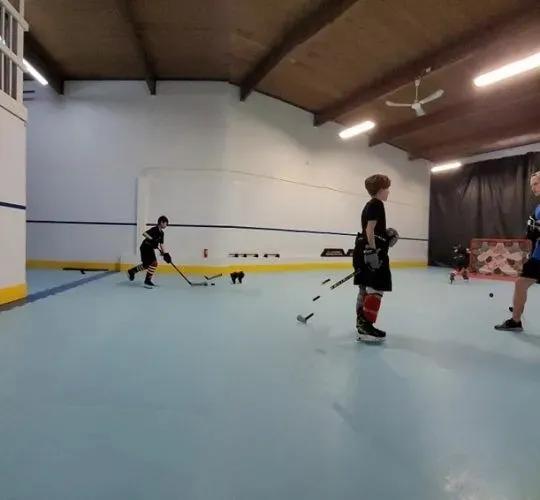
Skating performance is one of the most important skills in hockey. Speed, balance, agility, and explosive movement all depend on strong skating mechanics and proper stride development. Players at every level continually work on improving their skating efficiency to gain better control and acceleration on the ice. Many athletes and coaches use a Hockey Stride Trainer to help develop stronger skating habits and improve lower-body movement patterns.
A hockey stride involves far more than simply pushing off the ice. Proper stride mechanics require balance, edge control, posture, coordination, and power transfer. Training tools and focused exercises help players refine these movements while building confidence and consistency during games.
Importance of Skating in Hockey
Skating is the foundation of hockey performance. Regardless of position, players rely on efficient skating to accelerate, stop quickly, change direction, and maintain control during fast-paced play.
Strong skating mechanics allow athletes to move more efficiently while conserving energy throughout a game. Players with proper stride technique often gain advantages in speed, balance, and reaction time.
Because hockey is such a fast-moving sport, even small improvements in skating efficiency can significantly affect overall performance.
Understanding the Hockey Stride
A hockey stride consists of several coordinated movements working together to create speed and stability. Proper posture, knee bend, and edge control all contribute to effective skating mechanics.
During the stride, power is generated by pushing outward against the ice while maintaining balance through the hips and core. Recovery movements then return the skate underneath the body for the next push.
Many players struggle with issues such as short strides, poor balance, or limited extension. These problems can reduce skating efficiency and slow down movement on the ice.
Role of Training Tools in Skill Development
Training tools are commonly used to reinforce proper skating mechanics. A hockey stride trainer helps players focus on body positioning, stride extension, and balance while practicing movement patterns.
These tools are often designed to simulate skating motions both on and off the ice. By repeating proper movement patterns, athletes build muscle memory and improve coordination.
Off-ice training equipment also allows players to continue practicing during the offseason or away from the rink. Consistent repetition supports long-term skill development.
Building Lower Body Strength
Lower-body strength is essential for explosive skating power. The legs generate the force needed for acceleration, edge control, and quick directional changes.
Strength training exercises such as squats, lunges, and plyometric drills help improve skating performance by developing power and stability.
Core strength is equally important because it supports balance and posture during skating movements. Strong core muscles help players maintain control while transferring power through each stride.
Combining strength training with skating drills creates a more complete athletic development program.
Improving Balance and Stability
Balance is a critical part of skating mechanics. Hockey players must maintain stability while moving quickly, turning sharply, and reacting to opponents.
Balance training exercises help improve body control and coordination. Single-leg drills, stability exercises, and controlled skating movements teach athletes how to remain balanced during dynamic play.
Good balance also reduces the likelihood of inefficient movements that waste energy or affect skating speed.
Training programs that emphasize posture and body alignment often lead to smoother and more controlled skating.
Edge Control and Agility
Edge control refers to a player’s ability to use the inside and outside edges of the skate blades effectively. Strong edge control improves turning ability, stopping power, and overall agility.
Players with good edge control can transition between movements more efficiently and maintain better puck control during fast play.
Agility drills help athletes improve quickness and coordination. Cone drills, crossover exercises, and rapid direction-change movements strengthen skating responsiveness.
Developing edge control requires patience and repetition, but it plays a major role in advanced skating performance.
Importance of Proper Technique
Technique is often more important than raw speed alone. Players who use efficient mechanics conserve energy and maintain better control during games.
Proper skating posture includes bent knees, a low center of gravity, and forward body positioning. These elements improve balance and allow stronger stride extension.
Over striding or poor recovery mechanics can disrupt rhythm and reduce efficiency. Coaches frequently focus on correcting these habits early in player development.
Video analysis and skating instruction are useful tools for identifying mechanical weaknesses and tracking progress.
Off Ice Training Benefits
Off-ice training has become an important part of hockey development programs. Dryland exercises allow players to improve strength, conditioning, and skating mechanics outside the rink.
Slide boards, resistance bands, and movement drills are commonly used to simulate skating patterns while building endurance and coordination.
Off-ice programs are especially valuable during the offseason because they help athletes maintain conditioning and continue skill development year-round.
Consistent off-ice training often leads to smoother transitions and improved performance once players return to the ice.
Developing Speed and Acceleration
Acceleration is one of the most important aspects of hockey skating. Quick starts and explosive first steps allow players to react faster during gameplay.
Stride efficiency directly affects acceleration. Proper extension and recovery mechanics help players generate more power with each push.
Sprint drills, resistance exercises, and repeated skating intervals are commonly used to improve skating explosiveness.
Athletes who focus on technique alongside conditioning often see greater improvements in speed and endurance.
Importance of Consistent Practice
Like any athletic skill, skating improvement requires consistent practice and repetition. Players develop stronger habits through focused training sessions that reinforce proper movement patterns.
Short, high-quality practice sessions are often more effective than long sessions performed with poor technique. Coaches encourage athletes to prioritize form, balance, and control during drills.
Tracking progress over time also helps players stay motivated and identify areas for improvement.
Regular feedback from instructors and coaches contributes to long-term development.
Mental Confidence and Performance
Confidence plays an important role in skating performance. Players who feel comfortable with their skating mechanics often react more quickly and move more naturally during games.
Training programs that build consistency and control help athletes feel more prepared under pressure. Improved skating ability also contributes to overall confidence with puck handling and positioning.
Mental focus, discipline, and repetition all support long-term growth in hockey development.
As hockey continues to become faster and more competitive, skating remains one of the most valuable skills for athletes at every level. Developing proper stride mechanics, balance, and power can significantly improve performance and efficiency on the ice.